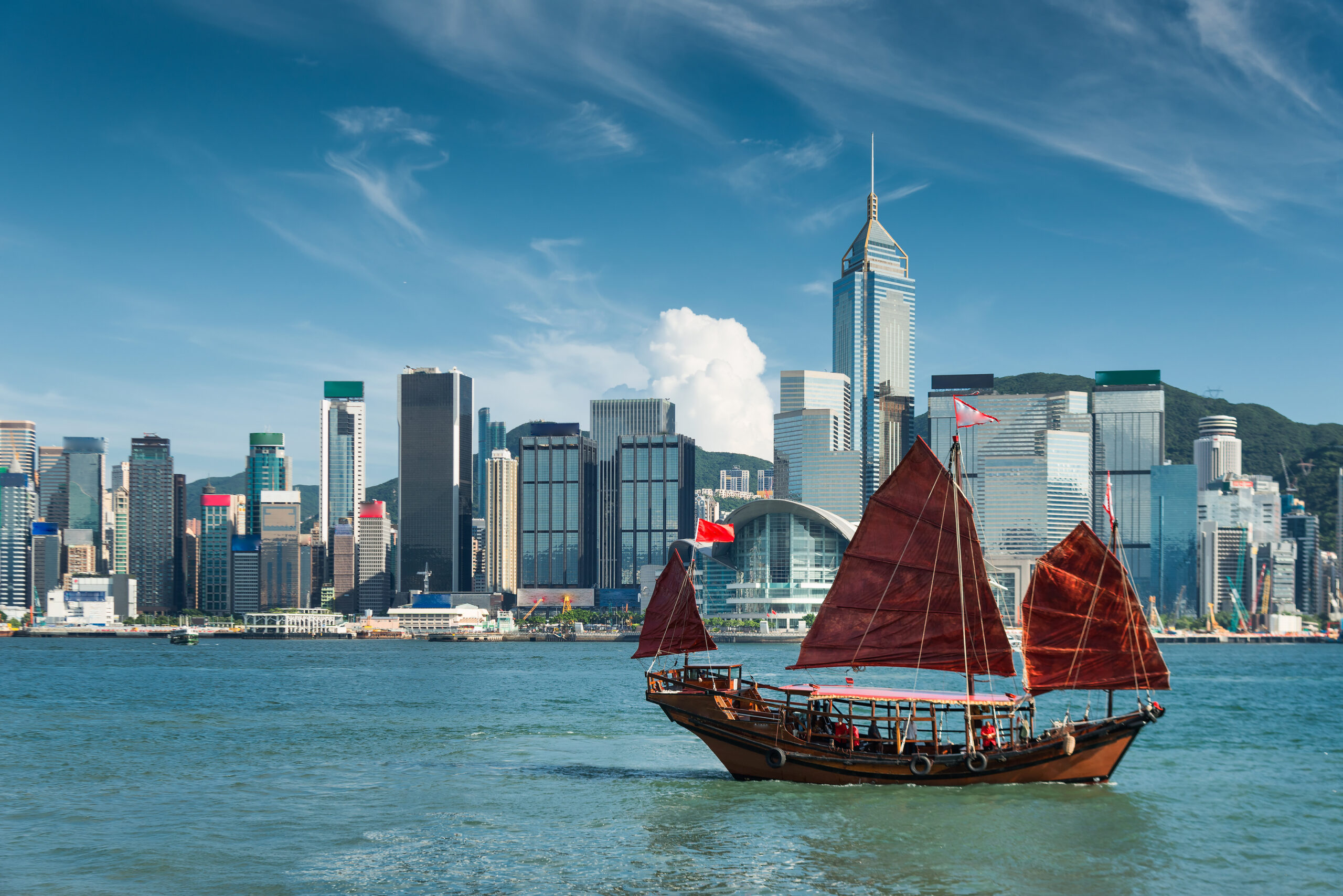
Part of the IQ-EQ series: Raising institutional capital in Asia-Pacific
At a glance
Why Hong Kong matters
Despite increasing competition from other regional centres, Hong Kong remains one of the most significant institutional fundraising markets in Asia.
One of Hong Kong’s unique characteristics is that many investment decisions affecting Asia-Pacific capital allocations continue to be made from Hong Kong, even where the underlying capital originates elsewhere. Regional CIOs, investment committees, sovereign capital representatives, private bank platforms and insurer investment teams frequently maintain decision-making functions in the city.
For U.S. managers seeking exposure to Asian capital, Hong Kong often serves two functions:
- It offers access to local institutional and private wealth capital
- It acts as a regional hub through which broader Asia-Pacific mandates are sourced, influenced and allocated
This dual role explains why Hong Kong continues to feature prominently in fundraising strategies despite significant growth in other Asian financial centres.
Hong Kong’s institutional investor landscape
Hong Kong Monetary Authority
The Hong Kong Monetary Authority (HKMA) represents one of the most influential institutional investors in Asia.
Acting as Hong Kong’s de facto central bank, the HKMA manages approximately US$514 billion and has historically maintained significant relationships with external asset managers across public and private markets. The organisation has long been regarded as an important allocator to global investment strategies and continues to represent a key component of Hong Kong’s institutional investor ecosystem.
For global managers, engagement with sovereign and public sector allocators such as the HKMA is often relationship-driven and requires long-term market commitment rather than purely transactional fundraising efforts.
Retirement capital
Hong Kong’s retirement capital market is another important source of institutional assets.
The Mandatory Provident Fund Authority (MPFA) oversees Hong Kong’s retirement system, which covers approximately five million members through multiple underlying investment schemes. Alongside the MPF system, Occupational Retirement Schemes Ordinance (ORSO) arrangements continue to play a significant role in the market.
Many ORSO schemes are legacy employer-sponsored arrangements with substantial autonomy over investment decisions and, in some cases, greater allocations to alternatives than traditional retirement schemes. For private markets managers, these investors can represent an important source of long-term capital.
Insurance capital
Hong Kong is also one of Asia’s largest insurance markets.
Beyond the size of insurer balance sheets, Hong Kong’s importance stems from its role as a regional centre for insurance-related investment activity. While some investment management functions have increasingly migrated to Singapore, many allocation decisions continue to involve Hong Kong-based stakeholders and investment professionals.
For managers focused on private credit, real assets and income-oriented strategies, insurance investors remain a highly relevant component of the fundraising landscape.
Family offices and private wealth
Family offices continue to attract significant attention from foreign managers entering Asia.
According to Deloitte, Hong Kong was home to 3,384 single-family offices at the end of 2025, while a recent report from Boston Consulting Group revealed that Hong Kong has become the world’s largest cross-border wealth booking centre.
However, many first-time entrants overestimate the importance of direct family office relationships and underestimate the influence of private banking platforms.
In practice, private banks frequently sit at the centre of manager selection and distribution decisions. Capital is often allocated through discretionary portfolios, feeder structures and approved product platforms managed by private banks rather than through direct investments into individual funds.
As a result, successful fundraising strategies often involve building relationships with both family offices and the intermediaries who influence capital allocation decisions.
Understanding Hong Kong’s regulatory framework
Licensing is activity-based
A common misconception among foreign managers is that offshore status limits the applicability of Hong Kong securities laws.
Hong Kong takes a different approach.
The SFC generally focuses on the activity being performed rather than the domicile of the manager involved. Fund marketing and distribution activities are primarily regulated through the following activities defined by the Securities and Futures Ordinance (SFO):
- Type 1 (Dealing in Securities)
- Type 9 (Asset Management)
This means foreign managers cannot assume that operating from outside Hong Kong automatically removes regulatory obligations.
Section 115: active marketing into Hong Kong
One of the most important concepts for U.S. managers is Section 115 of the SFO.
This provision prohibits persons from actively marketing regulated services to the Hong Kong public from outside Hong Kong unless appropriately licensed.
The SFC’s interpretation of active marketing is broad and can extend beyond traditional fund offering activity.
Examples may include:
- Repeated investor meetings
- Targeted communications
- Marketing campaigns
- Websites designed for Hong Kong investors
- Promotional materials distributed into the jurisdiction
- Coordinated investor outreach strategies
The practical consequence is that activities regarded as business development or relationship management elsewhere may be treated as regulated fundraising activity in Hong Kong.
Routes to market
Working through a licensed intermediary
For most U.S. managers, the most straightforward and commonly adopted fundraising model involves using a Hong Kong licensed intermediary.
These intermediaries commonly include:
- Placement agents
- Investment banks
- Securities firms
- Other Type 1 licensed entities
Under this model, solicitation activity is undertaken by the licensed intermediary, reducing regulatory risk for the offshore manager while providing access to established institutional networks.
The approach is particularly attractive for managers adopting a fly-in, fly-out fundraising model and seeking to avoid establishing a substantial onshore operation.
The fund-as-principal exemption
Hong Kong provides a limited exemption allowing a fund, acting as principal, to deal directly with certain Institutional Professional Investors without requiring a Type 1 licence.
However, managers should approach this exemption cautiously.
The exemption is narrowly framed and does not apply in all structures. Importantly, it generally cannot be relied upon where fundraising activity is undertaken by the investment adviser or manager on behalf of the fund.
Consequently, managers should avoid assuming the exemption provides a broad solution for offshore fundraising activity.
Reverse enquiry
Some foreign managers seek to rely on reverse solicitation or reverse enquiry arguments.
While reverse enquiry may be relevant in limited circumstances, it is not a statutory exemption and is assessed on a narrow facts-and-circumstances basis. Any evidence of proactive marketing may undermine the argument.
For that reason, reverse enquiry is rarely viewed as a scalable fundraising strategy and should generally be treated as a limited exception rather than a core market entry model.
Public offerings versus private placements
Hong Kong operates a prescriptive prospectus regime.
Public offerings of fund interests generally require SFC authorisation and compliance with multiple legislative requirements. The majority of publicly distributed funds in Hong Kong are UCITS products, with the remainder consisting largely of local fund structures.
Most U.S. private markets managers avoid the public distribution framework altogether.
Instead, institutional fundraising is typically conducted under private placement exemptions, including:
- Offers to Professional Investors
- Offers made to not more than 50 persons
These exemptions have become the primary route through which alternative investment managers access Hong Kong institutional capital.
Understanding the Professional Investor regime
One of the most important aspects of fundraising in Hong Kong is investor classification.
Many foreign managers assume all Professional Investors are treated identically. This is incorrect.
Institutional Professional Investors
Institutional Professional Investors generally include:
- Licensed intermediaries
- Banks
- Insurance companies
- Regulated investment schemes
- Government bodies
These investors benefit from a number of regulatory exemptions and reduced conduct requirements.
Corporate and high-net-worth Professional Investors
Corporate and high-net-worth investors may qualify as Professional Investors under asset-based thresholds, but do not automatically receive the same regulatory treatment.
Additional suitability assessments, knowledge evaluations and investor protection requirements may continue to apply.
The distinction has practical implications for:
- Meeting planning
- Investor onboarding
- Marketing materials
- Product suitability assessments
- Distributor obligations
Consequently, investor categorisation should occur before fundraising discussions begin.
IQ-EQ’s experience: common pitfalls for U.S. managers
Having supported international managers entering Asian fundraising markets, several recurring themes emerge in Hong Kong.
Mistaking Hong Kong for an unregulated relationship hub
The most common misunderstanding is the belief that Hong Kong acts merely as a regional meeting location rather than a regulated fundraising jurisdiction.
In practice, many investors based in Hong Kong allocate capital on behalf of offshore entities or regional mandates. Managers sometimes conclude that because capital originates elsewhere, Hong Kong regulatory considerations are secondary.
The SFC generally takes a different view. Fundraising activity is assessed based on where marketing occurs rather than where final commitments originate. Meetings held in Hong Kong may therefore be regulated even if capital is ultimately sourced from offshore structures.
Misunderstanding the fund-as-principal exemption
Managers sometimes assume this exemption permits broad fundraising freedom.
In practice, the exemption is considerably narrower than many expect and should be analysed carefully before being incorporated into a fundraising strategy.
Informal marketing by offshore investor relations teams
Another recurring issue involves offshore sales teams conducting investor outreach without fully considering Section 115 implications.
What appears to be relationship management may, from a regulatory perspective, constitute marketing activity.
Overreliance on Professional Investor status
Some managers assume all Professional Investors receive identical treatment.
The distinction between Institutional Professional Investors and other categories often becomes critical when assessing marketing approaches and licensing requirements.
Why many managers establish a Hong Kong presence
While numerous managers initially enter Hong Kong through local intermediaries, many ultimately establish a direct presence in the jurisdiction.
Several factors drive this decision.
Hong Kong remains one of the quickest and most accessible locations in Asia-Pacific for building a fully licensed fundraising capability. A local presence may enhance credibility with investors, improve relationship management and support broader regional distribution efforts.
The underlying research also notes that certain emerging fundraising opportunities, including structures linked to Hong Kong’s listed fund ecosystem, may require a Type 9 licensed manager.
For managers committed to long-term regional growth, a Hong Kong office increasingly becomes a strategic decision rather than a purely regulatory one.
Key takeaways
Hong Kong continues to offer U.S. managers access to some of Asia’s most important pools of institutional and private wealth capital. However, fundraising success requires more than investor access.
Managers should:
- Treat Hong Kong as a regulated fundraising jurisdiction
- Understand Section 115 and active marketing considerations
- Carefully classify investors before engagement
- Use exemptions cautiously
- Consider the role of licensed placement agents
- Develop a long-term market strategy rather than relying solely on opportunistic fundraising activity
The managers that achieve the greatest success are typically those that combine strong investment propositions with disciplined governance, carefully structured fundraising arrangements and a genuine commitment to the Hong Kong market.
How IQ-EQ can help
Successfully raising capital in Hong Kong requires clarity on the route to investors and the licensed support needed to engage them appropriately.
IQ-EQ supports global asset managers with market-entry planning, licensing considerations, outsourced compliance, fund operations and governance frameworks across Asia-Pacific.
Drawing on experience supporting managers across multiple jurisdictions, we help firms put practical fundraising and compliance arrangements in place so they can pursue Hong Kong institutional capital with confidence.
Get in touch today to learn more.
More from this article series
Click below to explore the main fundraising considerations in other key APAC markets: